
Flipping the Food System Ishpeming High School CTE Class Presents Project Proposals to Community Partners
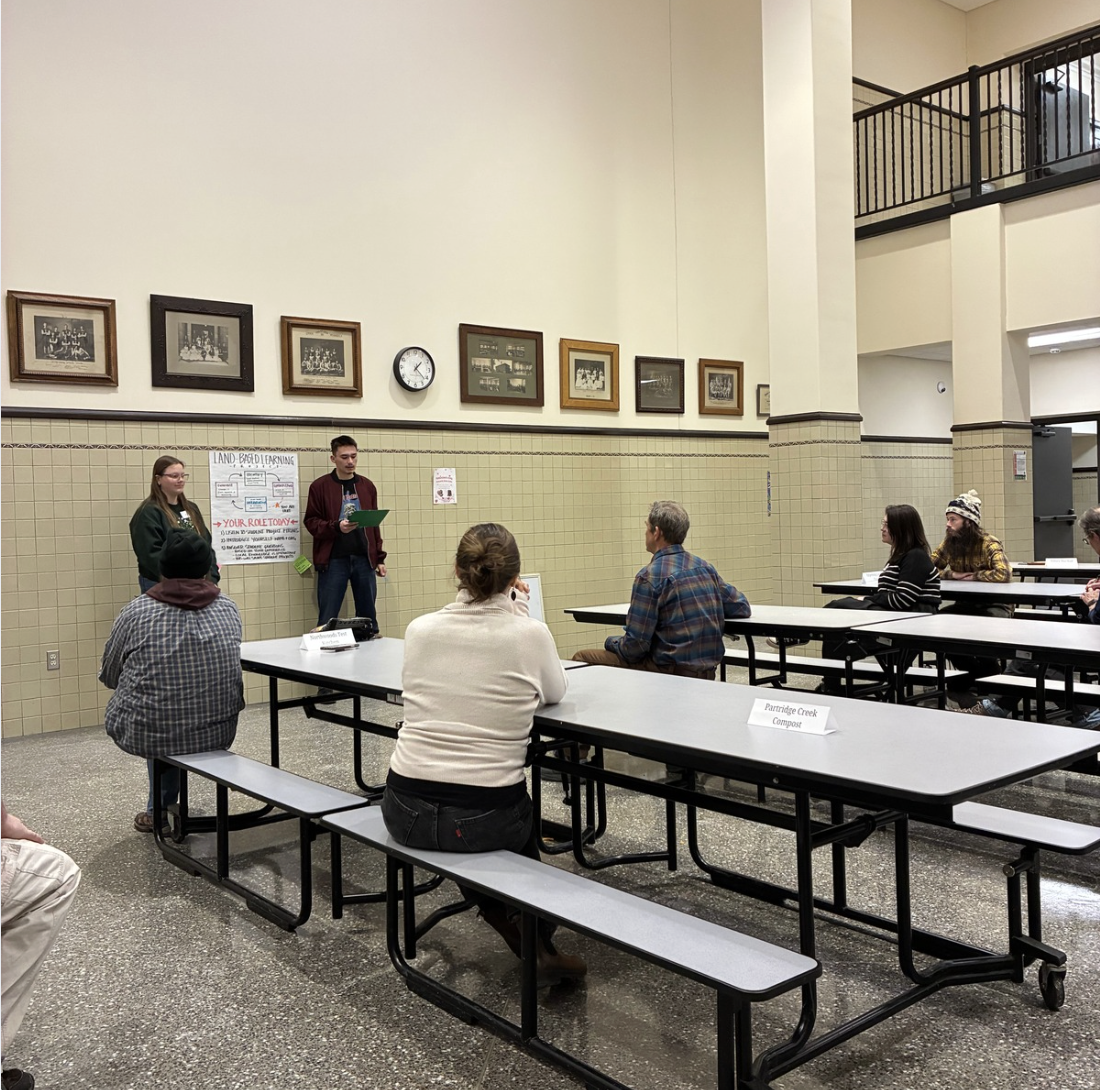
Ishpeming High School Students present in front of community partners. From left to right: Alex Palzewicz Northwoods Test Kitchen, Haley Brasier MARESA, Dan Perkins PCF Founder & Ishpeming Lions Club, Hillary Marshall Chartwells, Phil Carter Partridge Creek Compost
On Wednesday, February 4, Flipping the Food System Ishpeming High School CTE class showcased their land-based learning proposals to community partners who could offer their expertise on two proposed projects at Partridge Creek Community Farm and the Ishpeming Middle School Garden Greenhouse. Students showcased their skills using local ingredients by making muffins using home-grown pumpkins and maple sugar as local ingredients, and they made Cowboy Caviar utilizing PCF onions & garlic as well as apple cider vinegar students made during the fall semester.
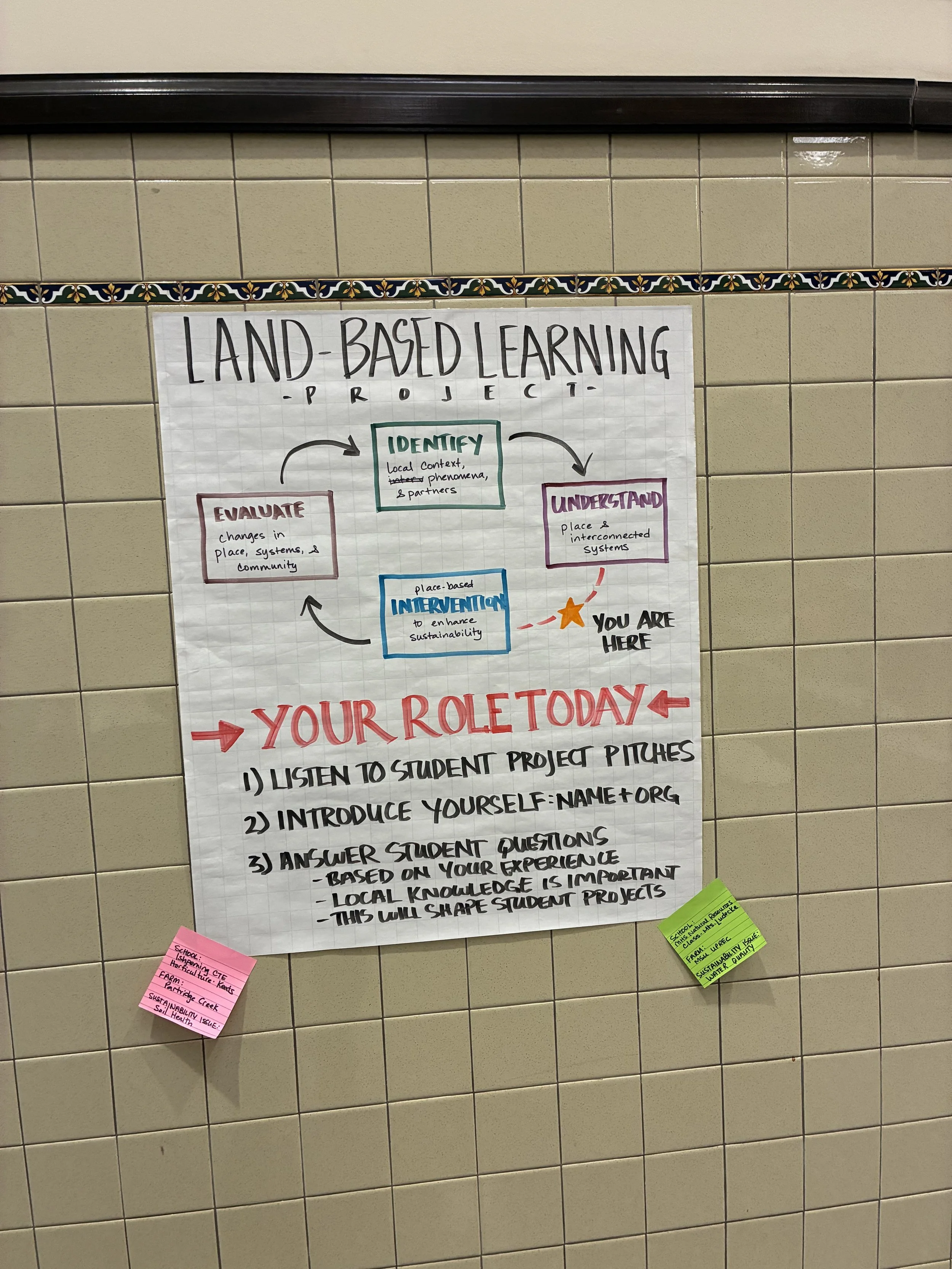
Students presented ideas they’ve developed over the past few months as a part of the Locally Integrated Food Teams In The Upper Peninsula (LIFT UP) with guidance from partners at MSU Extension and Marquette-Alger RESA. These student projects are focused on improving soil health at the Partridge Creek Community Farm and getting more local food into their cafeteria through the building of food forests both on the farm and within the CTE Greenhouse located at the Ishpeming Middle School Garden. The process of this project is designed to help students identify a sustainable need at a farm, design projects, write and apply for grant funding from the Sustainable Agriculture Resource and Education (SARE) & Food Futures awards. Students will actualize changes and evaluate results during summer 2026 internships to measure how their work affects the land and the Ishpeming community.
This event connects classroom learning to hands-on stewardship, giving students practical experience in designing sustainable projects, collaborating with local food-systems experts, and seeing real-world outcomes at Partridge Creek Farm and the school greenhouse.
Over the next two weeks, the class will use the information they gleaned from community partners to prepare mini-grant proposals for SARE grant partners and Food Futures grant partners to secure funding for the proposed projects.
Invited community partners included MSU Upper Research and Extension Center, Marquette Alger-RESA, Northwoods Test Kitchen, Chartwells, Partridge Creek Compost, Transition Marquette County, the Ishpeming Lions Club, the City of Ishpeming, Ishpeming School District Directors, and community member Ray Bush. Partners listened, asked questions, and offered expertise to help refine student plans and support implementation.








Learn More About These Programs
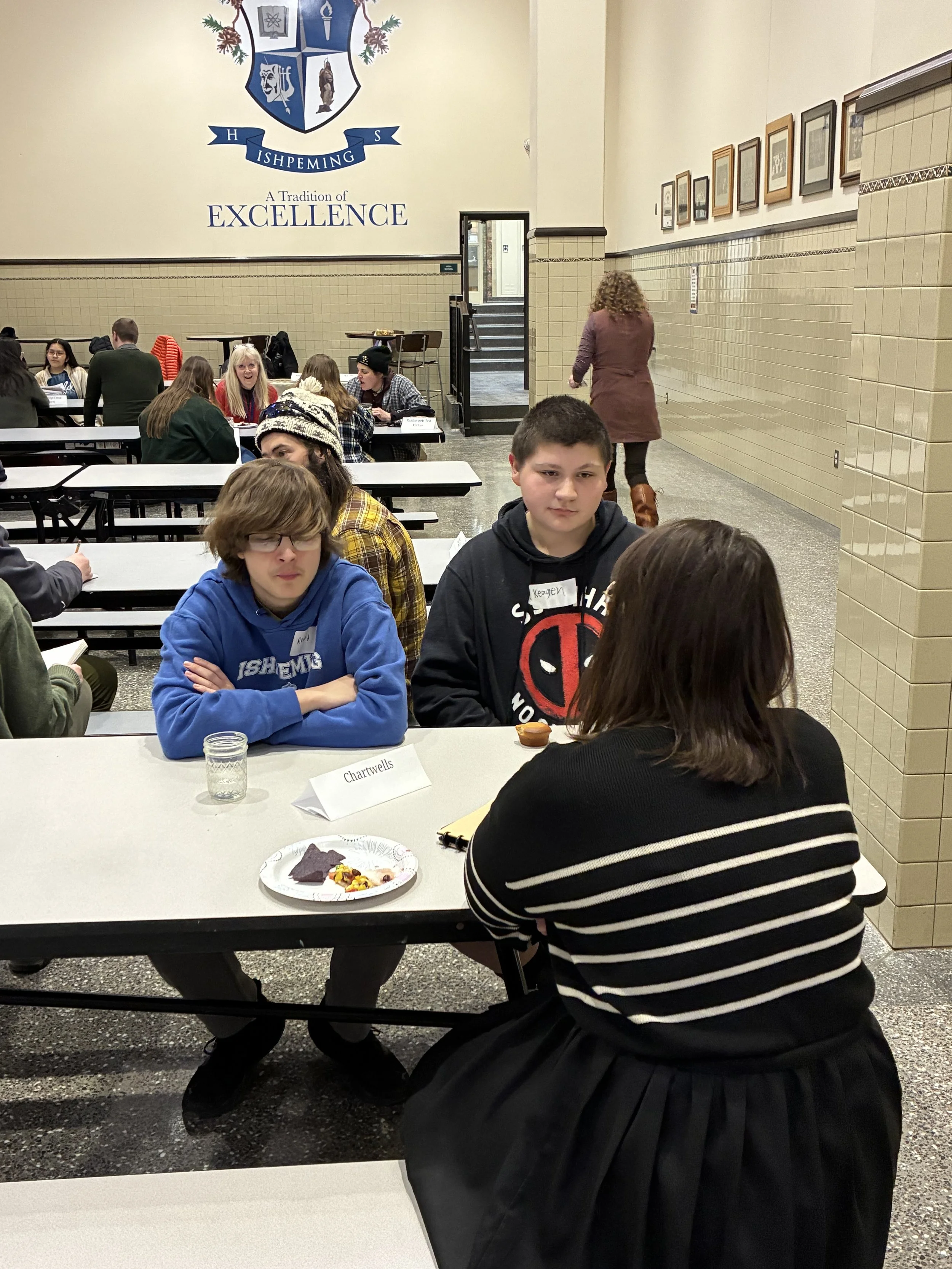
Flipping the Food System: Ishpeming High School’s Applied Horticulture CTE Class
This is an Ishpeming High School class taught by Partridge Creek Farm’s Education Coordinator, Keats Dormont. This horticulture class focuses on the benefits of local, small scale, and regenerative food production using permaculture and soil-food-web principles & practices. Outside of the classroom, students visit local farms & gardens that put these practices to use as they design and actualize such living systems themselves.
More Information About the Mentioned Awards
Each of these grants play an integral part in our education programming at Ishpeming High school to enhance our CTE (Career Technical Education) Horticulture students’ education opportunities.
The Sustainable Agriculture Research and Education Grant was awarded to Michigan State University Extension, Upper Peninsula Research and Extension Center to “fund research and education projects that advance sustainable agricultural practices in the United States.”
The Food Futures Project is working towards connecting rural production, procurement, and processing in the UP through education, collaboration, and community. In 2025, this project helped bring potatoes and other PCF grown produce into the Ishpeming School Cafeteria. The Lake Michigan School Food Systems Innovation Hub grant is sponsored by the U.S. Department of Agriculture (USDA). The grant is administered by the Illinois Public Institute of Health (IPHI) with further support from Michigan State University's Center for Regional Food Systems (MSU-CFRS)